Quick facts
- Typical real-world interval: 6 months for a combined 3-in-1 cartridge run daily
- Levoit Vital 200S-P replacement: $49.99 standard, $59.99–$64.99 pet and smoke versions
- Blueair Blue Pure 311i Max replacement: $44.99 standard, rated up to 9 months
- Running cost: roughly $50/year for the Levoit, about $120/year all-in for the Blueair
- Never do this: wash a HEPA layer — water destroys it permanently
Six months is the honest answer for most homes, even when the box says twelve.
The published interval assumes a clean apartment, moderate hours, and no pets.
Almost nobody runs a purifier that way.
The carbon layer decides the schedule, not the HEPA
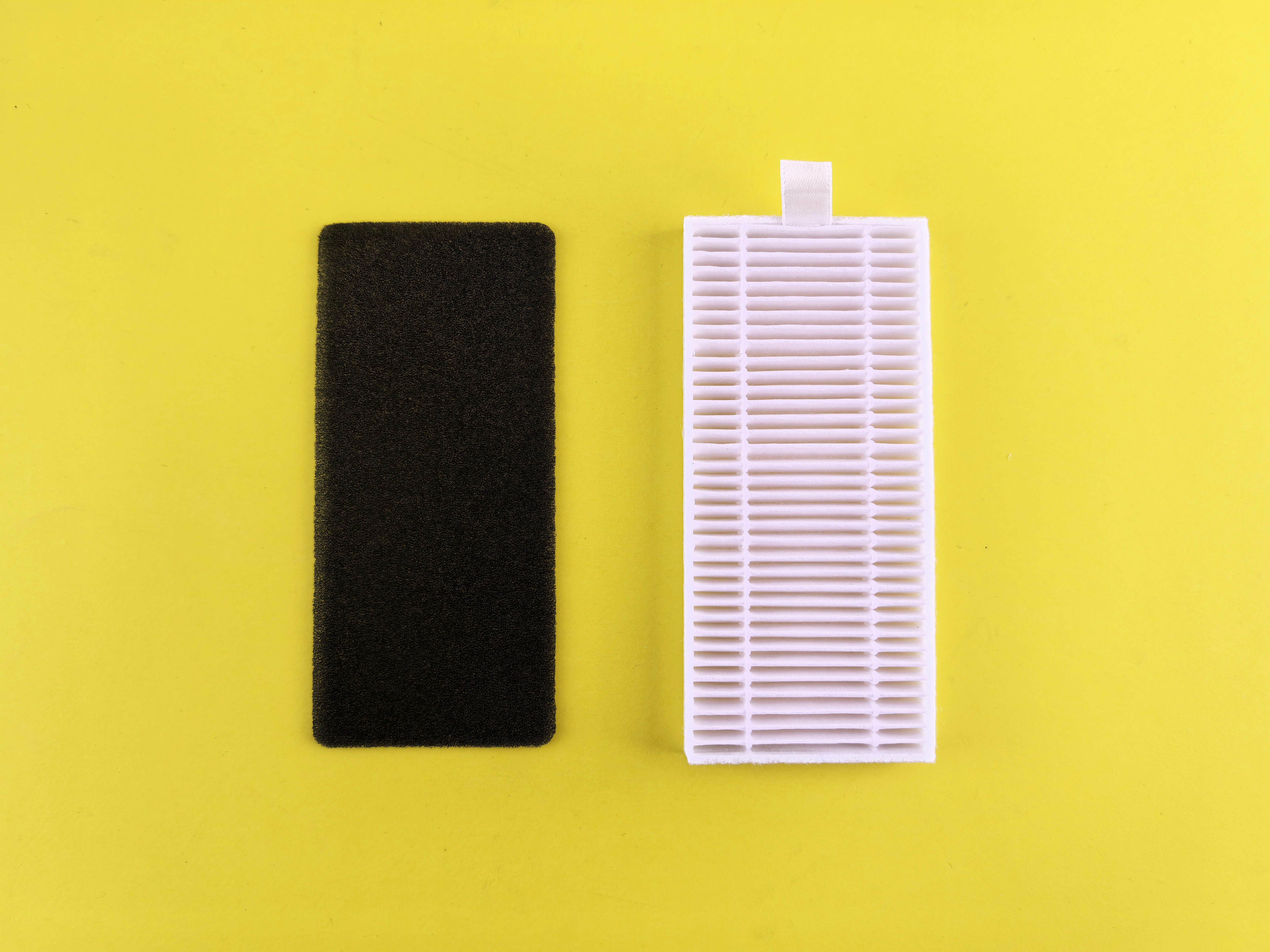
Most modern units use one 3-in-1 cartridge: a mesh pre-filter, a HEPA layer, and activated carbon.
Those three layers wear out at completely different speeds.
The HEPA layer can hold particles for a year or more before airflow drops noticeably.
The carbon layer is the weak link.
Carbon works by adsorption, and it saturates — usually in about 6 months of daily use.
Once it is saturated, it stops removing odors and gases entirely.
Because the layers are glued into one cartridge, the whole thing gets replaced on the carbon's schedule.
That is why a Levoit Vital 200S-P owner ends up spending near $50 a year on a $49.99 filter.
Four things cut the interval roughly in half
Pets are the biggest single factor — dander loads the pre-filter and hair blocks airflow.
Cooking smoke and candles saturate carbon faster than anything else in a normal home.
Wildfire season can exhaust a filter in weeks rather than months.
Running the unit 24 hours a day rather than eight roughly triples the air volume passing through it.
The indicator light is a timer counting hours of use, not a sensor measuring what the filter has actually absorbed.
That distinction matters in both directions.
A light that comes on after a mild, closed-window winter may be premature.
A light that has not come on during a smoky August is already wrong.
Inspect the filter instead of trusting the light
Unplug the unit and pull the cartridge out — this takes about a minute on both models above.
Look at the pre-filter side first. Grey fuzz is normal; a felted mat that blocks light is not.
Hold the cartridge up to a window. If you cannot see light through the pleats, airflow is already restricted.
Then smell it. A saturated carbon layer smells stale and slightly sour, and that odor is going back into the room.
Vacuum the mesh pre-filter side gently with a brush attachment.
Bottom line: A washable pre-filter is not a washable HEPA. Rinsing or vacuuming the white pleated layer ruptures the fibers, and the filter never recovers its rating.
The two cost models look different on paper than in the room
The Blueair Blue Pure 311i Max is rated up to 9 months per filter at $44.99.
Its allergen version is $64.99 and its smoke version $59.99.
At a realistic 6-month cadence, and counting its 32 W draw, it lands near $120 a year all-in.
The Levoit's cartridge is more expensive but its schedule is simpler.
Neither number is large, but both are ongoing, and buyers routinely forget them.
Our Levoit Vital 200S-P Review: The 5 Numbers That Decide a $190 Purifier breaks down where that money actually goes.
Set a calendar reminder for six months out and inspect rather than replace on sight.
If the pleats are still bright and the carbon still smells neutral, give it another two months.
Read the EPA guide to air cleaners in the homeOfficial U.S. Environmental Protection Agency →