Quick facts
- Best room: the bedroom — that is roughly 8 hours of uninterrupted exposure a day
- Clearance: at least 12 inches on every intake and exhaust face
- Doors: closed, because sizing math assumes one sealed room
- Time to judge it: give a correctly sized unit about 30 minutes on medium before deciding it does nothing
Put it in the room you actually breathe in, then give it room to breathe
Most people put the purifier in the living room because that is where guests see it.
Then they sleep eight hours in a different room with the door shut.
A purifier only cleans the air it can pull through itself, and air does not migrate through walls on your behalf.
If you own one unit, it belongs where you sleep.
If you own two, the second goes wherever the pollution starts — not wherever the furniture allows.
Twelve inches of clearance, on every face that moves air
Purifiers pull air in through a grille and push it out through another.
Push either of those against a wall and the machine starts re-inhaling its own exhaust.
Give it at least 12 inches of open space on the intake side, and the same on the outlet.
Corners are the worst spot in any room, because two walls block the flow at once.
Behind a couch, under a shelf, and inside a media cabinet are the same mistake in different furniture.
A unit rated for 350 square feet and jammed into a corner is behaving like a unit rated for far less.
Top-exhaust designs are the forgiving ones here, since the outlet fires straight up into open air.
Side-exhaust units are the ones that punish a bad spot, and they are also the ones most people push flat against a wall.
Near the source beats near the center
The fastest way to cut a particle count is to catch the particles before they spread.
That means placing the machine near where the problem is generated, not in the geometric middle of the room.
| If your issue is | Put the purifier |
|---|---|
| Sleep, allergies, dust | Bedroom, 3-6 feet from the head of the bed |
| Cooking smoke, frying | Near the kitchen doorway, not under the hood |
| A cat box or dog bed | Within a few feet of it, on the same side of the room |
| Wildfire smoke or traffic | Near the entry door or the leakiest window |
The one exception is a doorway you walk through constantly.
Airflow there is already turbulent, and a machine in the traffic path gets bumped, unplugged, and eventually moved.
A purifier's rating describes a clear path to the fan, not a spot on the floor plan.
Height depends on what you are chasing
Floor level is fine for settled dust, pet dander, and anything heavy enough to fall.
Cooking smoke, candle soot, and wildfire particulate are light and drift upward with warm air.
For those, a purifier raised one to two feet off the floor catches more before the particles reach the ceiling.
Raised does not mean on a bookshelf with three inches of clearance.
A sturdy low table works. A crowded shelf undoes the gain immediately.
Closing the door is part of the placement
Every square-footage rating is measured in a sealed test chamber.
An open bedroom door adds hallway, stairwell, and whatever the rest of the house is doing.
That is why the same machine feels weak in an open floor plan and strong in a closed bedroom.
Close the door about 30 minutes before bed and let the unit get ahead of the room.
If a doorway cannot close, size for the whole connected space instead.
Our Levoit Vital 200S-P Review: The 5 Numbers That Decide a $190 Purifier works through what that costs.
One more thing worth checking on placement day.
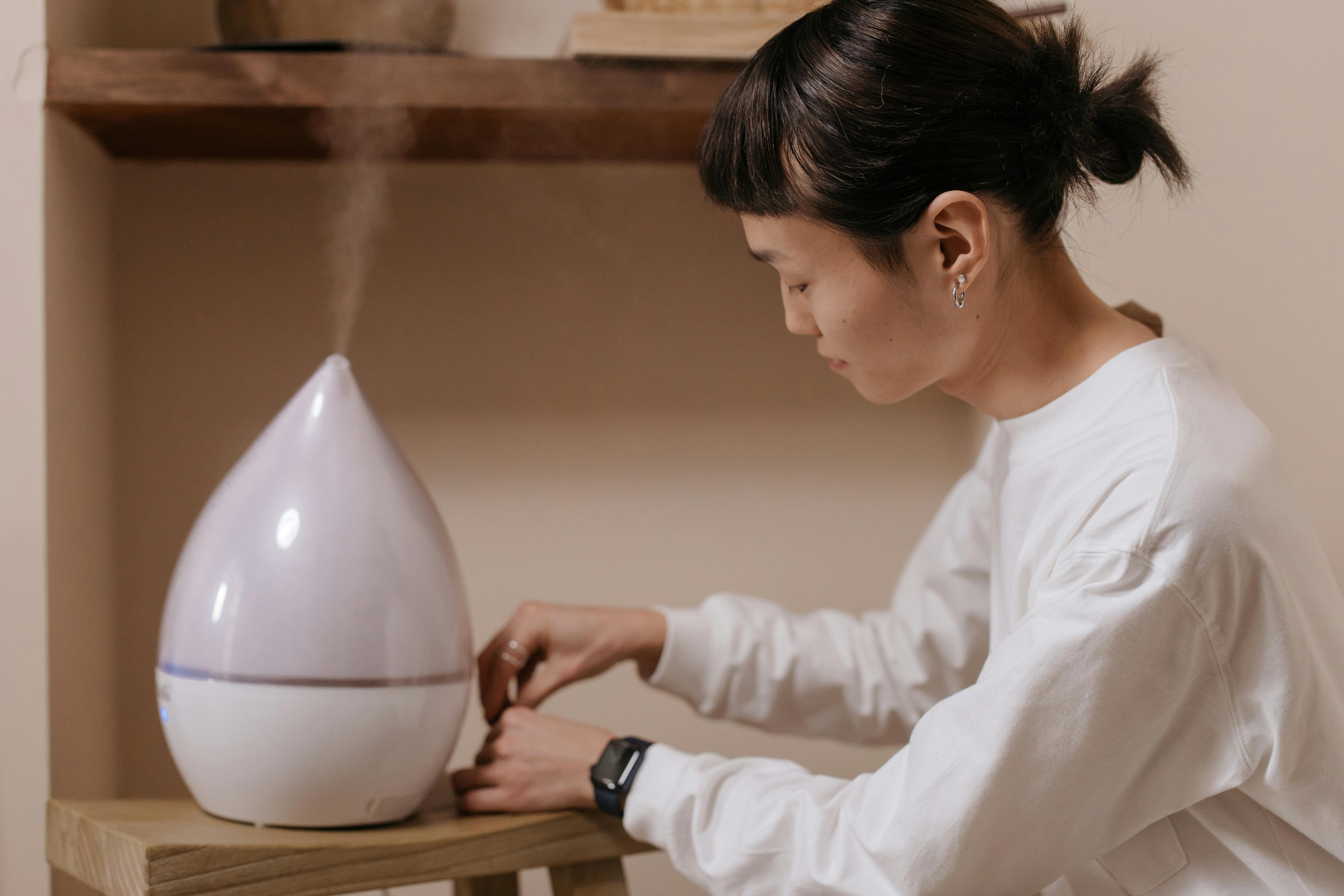
Keep the purifier a few feet from a running humidifier, since damp air loads a filter faster than dry air does.
Read the EPA's guide to air cleaners in the homeU.S. Environmental Protection Agency →