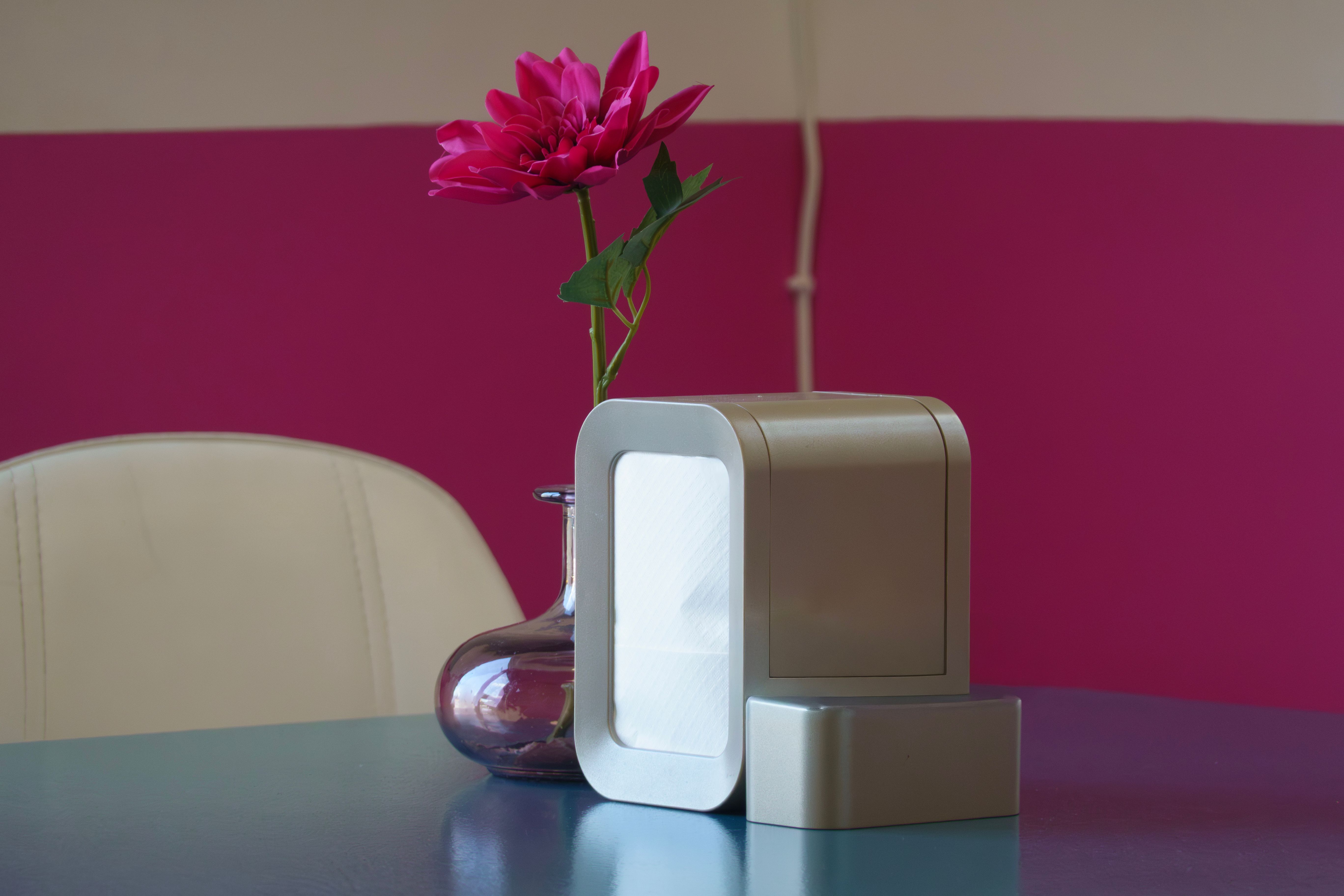
Put it out in the open, raised roughly a metre off the floor, at least a metre from where you sleep, and well clear of walls, windows and anything wooden.
Quick facts
- Clearance: 30cm minimum from any wall, more from a cold external one
- Height: 60–100cm off the floor, on a hard surface
- Distance from the bed: 1–2 metres, with the nozzle pointed away
- Target humidity: 40–60%, read on a separate hygrometer across the room
Almost every one of those numbers is broken by the bedside table, which is where most of them end up.
The bedside table fails on three counts at once, and the sensor is the worst of them
A cool mist humidifier carries its humidistat on the body of the unit, usually within a few centimetres of the nozzle.
Sit it beside your head and that sensor spends the night inside its own output.
It reads 60% and shuts the mist off while the rest of the room is still sitting at 38%.
You wake up to a full tank, a dry throat and the reasonable conclusion that the machine is faulty.
It is not faulty. It has been told a lie by its own exhaust.
The second problem is the pillow.
Cool mist is water that has not evaporated yet, and it falls before it disperses.
At half a metre it lands on the bedding, which feels cold rather than humid by four in the morning.
The third is simply a litre or more of water sitting next to a lamp, a phone and a charger.
Height does the distributing that the fan cannot
Lift the unit onto a chest of drawers or a low bookcase and the mist gets 60 to 100cm of falling distance to evaporate into.
On the floor it does not get that, so it wets a circle of carpet about a metre across and humidifies very little else.
Ultrasonic models are the worst for this, because they throw visible droplets rather than vapour.
A warm mist unit is less fussy about height, but it is also hot water in a room, which is its own reason to keep it off the floor.
Put whatever you use on a hard surface, not bare wood.
A tray, a tile or a folded tea towel will take the condensation ring that otherwise lifts the varnish.
A humidifier beside your pillow is measuring its own mist, which is why it stops working long before the room is comfortable.
Cold surfaces are where the water you added ends up
Give a window, an external wall and a single-glazed reveal a wide berth.
Those are the coldest surfaces in a British bedroom, and water vapour condenses on the coldest thing it can find.
Aim a humidifier at one and you are not raising the room's humidity so much as running a slow tap onto the plaster.
Black spotting on the window reveal a fortnight later is the usual result.
The same logic rules out the space behind a curtain or inside a wardrobe alcove, where air does not move.
Keep it away from a radiator too, for the opposite reason.
Warm dry air crossing the sensor makes the unit read low and keep running past the point where it should stop.
Damp caused by over-humidifying looks identical to damp from any other source once it has taken hold.
Hard water lands on whatever is nearest
Most of England and Wales sits in a hard water area, and the minerals in the tank do not evaporate with the water.
They settle as a fine white dust within a metre or two of the nozzle.
That is a reason to keep the unit off the top of the television, away from the back of a router and clear of an open laptop.
It is also a reason to point the nozzle into open space rather than at a piece of furniture.
Whether the dust appears at all comes down to the water you fill it with, which our Levoit Classic 300S review: the 5 numbers that decide it covers alongside the tank figures.
Put the hygrometer somewhere else entirely
Buy a separate hygrometer for £10 and place it at the far side of the room, roughly at pillow height.
That is the only reading that tells you what the room is doing rather than what the machine is doing.
Then shut the bedroom door, because a humidifier rated for a bedroom is not rated for a landing and a stairwell.
Move the unit once, read the hygrometer two nights running, and leave it where the number sits between 40 and 60%.